
Energies 2.0 explores the transformative potential of decentralized energy solutions and green innovation by fostering collaboration and advancing cutting-edge strategies. This event aims to bring together innovators, policymakers, and thought leaders to envision energy systems that prioritize accessibility, sustainability, and community empowerment.


KEYNOTE SPEAKER

Prof. Yemi Oke, Ph.D, FCArb, FCTI, (SAN)

Professor of Law & Consulting Partner, Power, Energy & Dispute Resolution


SPEAKERS
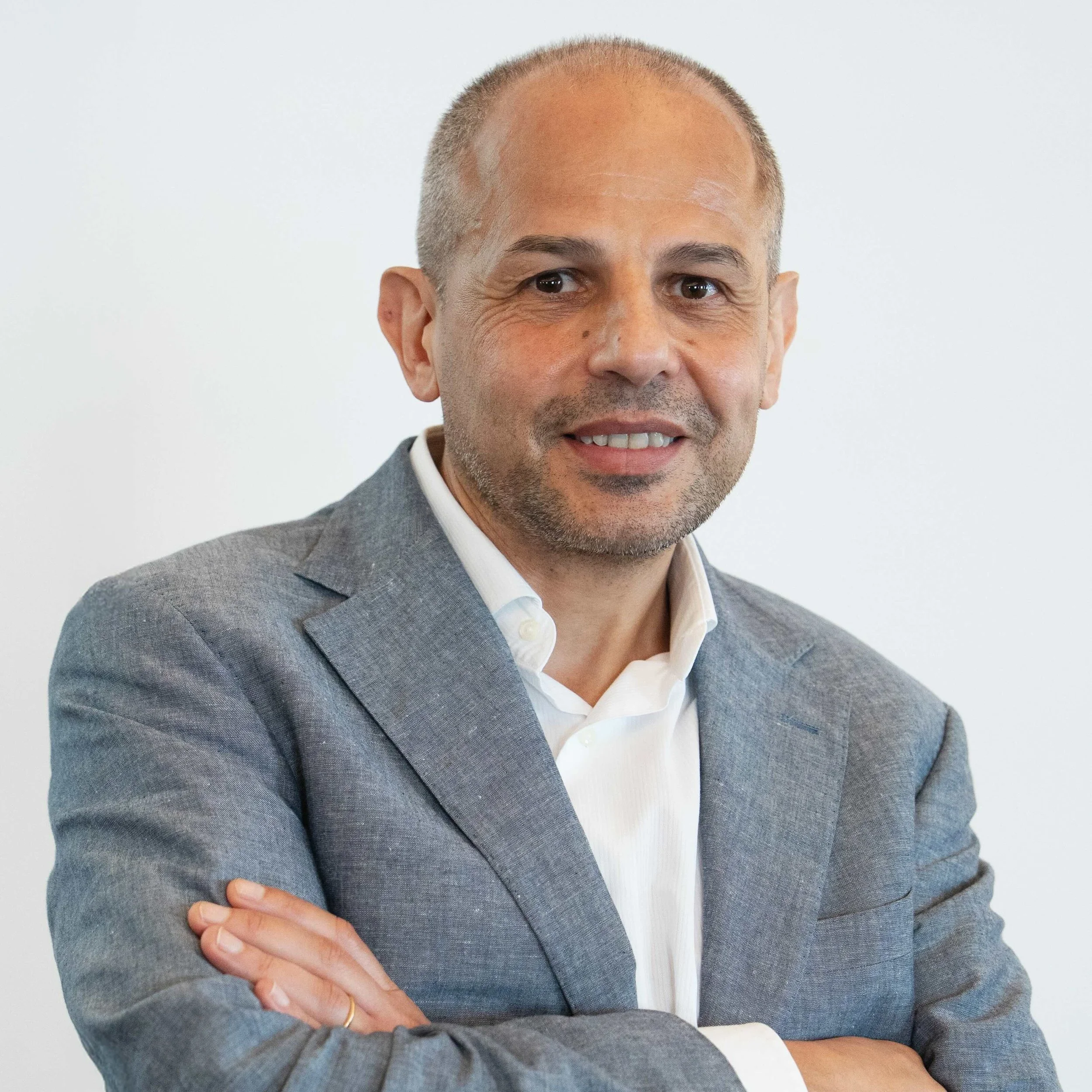
Alberto Troccoli

Co-founder and CEO, Inside Climate Service (srl) and World Energy & Meteorology Council, United Kingdom

Professor Adrian Tantau

Professor, ASE Bucharest and UNESCO Chair for Business Administration, Romania

Dr. Godswill A. Agbaitoro

Lecturer, International Energy and Environment Law, University of Essex, United Kingdom

Litu Sethi

Ph.D. Research Scholar, National Institute of Technology, India

Dr. Aritra Chakrabarty

Postdoctoral Research Associate, European Centre for Environment and Human Health


Conference Chair

Prof. Daniel M. Kammen

Professor of Energy, University of California, Berkeley, United States

 

These subthemes for Energies 3.0 focus on 'Community-Led Transitions: Energy Justice, Resilience, and Innovation in the Global South,' while also welcoming submissions on other relevant topics.

ENERGY JUSTICE AND EQUITABLE TRANSITIONS IN THE GLOBAL SOUTH

  • Rights-Based Approaches to Energy Access and Affordability

  • Addressing Energy Poverty, Inequality, and Vulnerable Populations

  • Gender, Youth, and Inclusion in Energy Decision-Making

  • Community Impacts of Large-Scale Renewable and Transition Projects

  • Historical Injustices, Fossil Legacies, and Just Transition Pathways

COMMUNITY GOVERNANCE, OWNERSHIP, AND PARTICIPATION

  • Community Energy Cooperatives and Local Ownership Models

  • Participatory Planning, Consent, and Social Licence to Operate

  • Traditional, Indigenous, and Local Knowledge in Energy Governance

  • Accountability, Transparency, and Conflict Resolution in Community Projects

  • Comparative Case Studies of Community-Led Energy Transitions

RESILIENT LOCAL ENERGY SYSTEMS IN A CHANGING CLIMATE

  • Climate-Resilient Microgrids, Mini-Grids, and Hybrid Systems

  • Energy Solutions for Informal Settlements and Off-Grid Communities

  • Disaster Preparedness, Emergency Power, and Critical Infrastructure

  • Nature-Based and Ecosystem-Sensitive Energy Planning Approaches

  • Building Local Adaptive Capacity and Social Resilience Through Energy

FINANCING, POLICY, AND INSTITUTIONS FOR COMMUNITY-LED TRANSITIONS

  • National Policies and Regulatory Frameworks for Energy Justice

  • Climate and Energy Finance for Community and Local Projects

  • Public–Private–Community Partnerships and Innovative Business Models

  • Aligning NDCs and Just Transition Plans with Local Priorities

  • Overcoming Legal, Institutional, and Market Barriers to Community Energy

INNOVATION, TECHNOLOGY, AND KNOWLEDGE SYSTEMS FOR INCLUSIVE ENERGY FUTURES

  • Low-Cost, Context-Appropriate Renewable Technologies for Communities

  • Digital Tools, Data, and Smart Systems for Local Energy Planning

  • Education, Capacity Building, and Youth Leadership in Energy Transitions

  • Feminist, Indigenous, and Local Knowledge in Energy Innovation

  • South–South and South–North Knowledge Exchange in Community Energy

Register or Submit Abstract

As the global energy sector transforms, there is a growing need for skilled professionals to lead the shift to cleaner, more sustainable systems, particularly in oil-dependent countries like Nigeria. In response, The Green Institute, in partnership with ASELLMU, the Institute for Oil, Gas, Energy, Environment and Sustainable Development, and the International Law Association (Nigerian Branch), is launching a high-impact training program designed to equip professionals with advanced legal knowledge, sustainability strategies, and practical tools for navigating the intersection of energy, law, and environmental governance.


The Advanced Certificate in Energy Transition and Sustainability For Oil, Gas, and Allied Sector Professionals Training 2025.

Day 1: Tuesday, April 22, 2026

Hybrid Workshop – Session I
Foundations in Energy Transition & Sustainability

  • Facilitator: Dr. Adenike A. Akinsemolu

  • Speaker: Prof. Damilola S. Olawuyi

  • Speaker: 

  • Speaker: 

  • Speaker: 

  • Moderator:


Day 2: Wednesday, April 23, 2026

Hybrid Workshop – Session II
Legal Frameworks, Financing, Innovation, and Strategic Leadership

  • Speaker: Prof. Damilola S. Olawuyi

  • Speaker: Dr. Riyad Fakhri

  • Speaker: Prof. Marc Rosen

  • Breakout Rooms Facilitated by: The Green Institute Team

  • Facilitator: The Green Institute

REGISTER

Important Deadlines

DEADLINE FOR Abstract Submission

March 13, 2026

Acceptance Notification

March 20, 2026

DEADLINE FOR EARLY-BIRD REGISTRATION

March 27, 2026

DEADLINE FOR Full Paper Submission and Registration

March 27, 2026


Abstract Submission

During the registration process, you will have the opportunity to submit a 250-word abstract in English. This abstract should include the title, theme, focus, and main contributions of your paper, article, or research.

REGISTER OR SUBMIT ABSTRACT

Paper Format

All panel abstracts, paper abstracts, posters, and presentations will be available online as open access on our website.

Three types of manuscripts may be submitted:

  • Full-length Articles: These should describe new and carefully confirmed findings, and experimental procedures should be given in sufficient detail for others to verify the work. The length of a full paper should be the minimum required to describe and interpret the work clearly.

  • Short Communications: Suitable for recording the results of complete small investigations or giving details of new models or hypotheses, innovative methods, techniques, or apparatus. The style of the main sections need not conform to that of full-length papers. Short communications should be 2 to 4 printed pages (about 6 to 12 manuscript pages) in length.

  • Reviews: Submissions of reviews and perspectives covering topics of current interest are welcome and encouraged. Reviews should be concise and no longer than 4-6 printed pages (about 12 to 18 manuscript pages). Reviews are also peer-reviewed.

  • Posters: Submission of posters must include data and methodology. Posters are subject to peer review and will be made available on all our platforms before the day of the event.

Anyone wishing to present or publish a presented paper must register for the conference and submit an abstract(s). Abstracts and full-length papers (in case of peer-reviewed publication) should be emailed to hello@greeninstitute.ng with the MS Word file name format "Energies2025_Peterson_Abstract" or "Energies2025_Peterson_Fullpaper", where "Peterson" represents the corresponding author's surname and "Energies2025" stands for the conference code.


Fees & Certification

CONFERENCE Certification

A verifiable ‘Certificate of Participation’ will be issued to participants who have successfully presented their papers, at a discounted rate.

  • Participation + Certificate: $10

  • Oral Presentation + Certificate: $25

  • Poster Presentation + Certificate: $25

  • Presentation + Certificate + Publication: $100

You will have the option to make your certification payment after receiving registration confirmation from the Organizing Committee.


Workshop Fees

  • Students
    Early Registration: ₦100,000 or $100 (Deadline-February)

  • Early Bird: ₦300,000 or $300 (Deadline- February)

Limited slots available for a focused learning environment.

REGISTER OR SUBMIT ABSTRACT

All participants—keynote speakers, panelists, presenters, and the audience—have the opportunity to submit and deliver their papers on the sub-themes listed above. Why not showcase your views on sustainability to the world at this year's event?

The conference features five sessions, with three keynote speakers delivering opening lectures central to the theme. Following this, each of the five sessions will have ten or more speakers presenting their articles or papers.

A moderator will manage the speakers, presentations, and timing. Each session will last for two hours, including a short break.

Keynote Speakers

Each keynote speaker has a total of 30 minutes to deliver their article, paper, or research. The first 20 minutes are for the lecture or presentation, followed by a brief ten-minute Question and Answer session.

Presenters

Presenters have 12 minutes for their lectures: ten minutes for the presentation on their chosen sub-theme and two minutes for a quick Question and Answer session.

Medium for Attendance

This year's conference will be virtual. Participants—speakers, panelists, presenters, and the audience—will receive a link for the video conference via email or text message.

We will also live-stream the conference in real-time. Connect and join us from anywhere via a phone or computer. If you're presenting a lecture, you will need a good microphone, in addition to a webcam and a computer or phone. Please test these devices before the online conference begins to ensure they are working properly.

After registering, you will receive more information about the Energies 1. 0 conference. If you have any questions or wish to know more about this online conference, email us at hello@greeninstitute.ng or click here. Our team is ready to assist you.

Venue & Experience

Nibanola Resort is a world-class getaway destination and agro-resort located in Ondo State, Nigeria. It is known for its blend of nature, culture, and modern hospitality, featuring an 18-hole golf course and numerous activities

FOR RESERVATION INFORMATION

Download HOTEL LIST

Benefits of WORKSHOP Participation

Joint Advanced Certificate

Free Conference Access & Induction

Networking with Global Experts & Industry Leaders

Sustainability Toolkit & Learning Resources

Curated Nature Tour & Cultural Immersion

Access to post-event policy and industry briefings


Who Should Attend

Ideal for:

  • Energy and oil & gas professionals

  • Environmental lawyers and legal practitioners

  • ESG and climate risk analysts

  • Sustainability consultants and officers

  • Policymakers, researchers, and students


Inquiries: hello@greeninstitute.ng | +234 814 777 4444

TO BE ANNOUNCED